
13.06.2018 · 👁 3,602
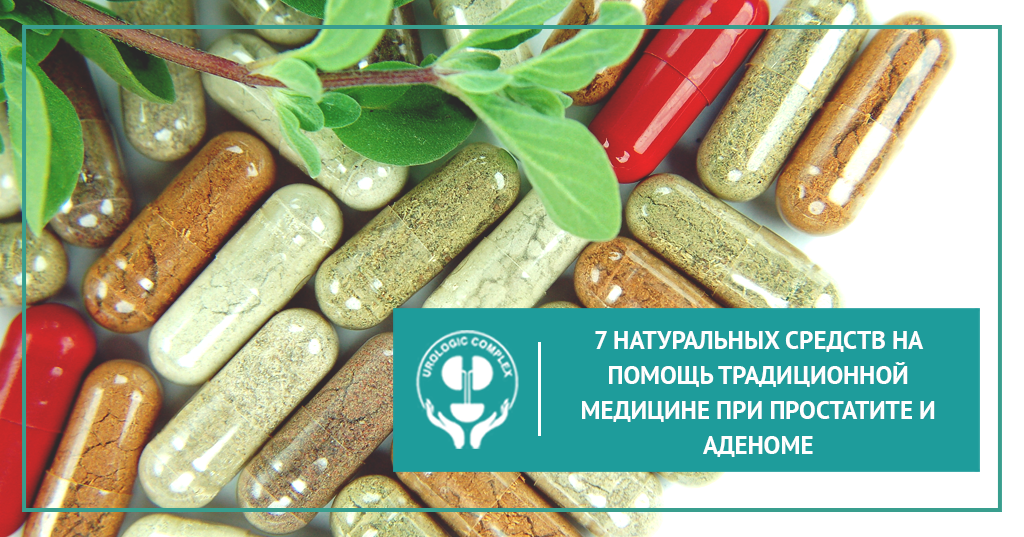
7 natural remedies to help traditional medicine with prostatitis and adenoma.
Enlargement of the prostate gland occurs as a result of its inflammation and swelling with prostatitis or tissue proliferation with benign hyperplasia - prostate adenoma. In all cases, the man experiences discomfort, heaviness in the perineum, some kind of urination disorder, and often sexual problems. An enlarged prostate negatively affects the quality of life and requires qualified treatment from a urologist. In addition to classical medications, for dysuric phenomena, you can use natural remedies that complement and enhance the effect of treatment.
Natural Remedies to Reduce Prostate Volume
Plum. It contains a wide range of fatty acids, as well as beta-sitosterol, a substance with anti-inflammatory and antioxidant effects on the genitourinary tract. Several independent studies have confirmed that eating plums can significantly shrink the prostate with BPH.
Flower pollen extract Cernilton (Cernilton) American food additive Cernilton is an extract from flower pollen, processed with enzymes using a special patented technology. Limited research conducted in the late 1990s and early 2000s suggested the effectiveness of Cernilton in the treatment of chronic prostatitis and adenoma. In particular, taking the extract promotes more complete emptying of the bladder and reduces the frequency of urges at night. Despite its worldwide popularity, Cernilton has never been tested in large-scale clinical trials and therefore remains in modest status as a dietary supplement.
Stinging nettle (Urticadioica, Stingingnettleextract) Nettle leaf extract contains antioxidant and anti-inflammatory substances. American evidence-based medicine considers the effect of nettle on prostatitis and adenoma to be insufficiently substantiated, and therefore the plant is used only in supplements.
Pumpkin seed oil. Pumpkin seeds are high in sterols, including beta-sitosterol, a plant analogue of cholesterol. According to scientists, this substance improves urination and reduces the volume of residual urine in benign prostatic hyperplasia (BPH). Pumpkin oil is produced in liquid form, capsules, and candles.
Lycopene, or lycopene (Lycopene) Lycopene is a natural remedy for adenoma and prostatitis, which is obtained from many fruits and vegetables. Tomatoes are the richest source of lycopene available to most men. But papaya, watermelon, guava, carrots, and apricots can be considered as alternative sources.
Nutritional supplements with zinc. Zinc deficiency increases the risk of adenoma, so urologists advise taking zinc sulfate (Zincteral) or nutritional supplements with this trace element. There is limited scientific evidence that daily zinc supplementation causes a decrease in prostate volume in chronic prostatitis and BPH. Zinc can be found in chicken, seafood, and a variety of seeds and nuts.
Green tea extract. Green tea differs from black tea in its high content of antioxidants - catechins, which stimulate the immune system and, theoretically, suppress the inflammatory process. Moreover, studies show that catechins slow the development of prostate cancer in vitro. However, it is important for older men to remember the caffeine contained in green tea. Because of its diuretic properties, caffeine worsens the symptoms of benign prostatic hyperplasia in some patients.
Lifestyle during treatment of prostatitis and adenoma
Nutritional supplements are good, but in the complex treatment of chronic prostatitis and BPH, your habits, proper lifestyle and nutrition play an invaluable role. If the prostate gland is enlarged, urologists advise:
• Avoid drinking alcohol, including beer and low-alcohol drinks.
• Drink small amounts of liquid throughout the day.
• Avoid a sedentary lifestyle and move as much as possible.
• Avoid stress
And, most importantly, do all this under the supervision of a professional urologist.
Medical expert of this article
Джураев Хасан Каримович
врач уролог-андролог · clinic «Doctor Hasan»
Appointments and consultations:
+998 55 055 10 04
Call
This information is for reference only. If you have symptoms, see a doctor.
Appointment
Обратитесь к врачу
Информация в статье носит общий характер. Для точного диагноза и плана лечения нужен очный осмотр — позвоните, подберём удобное время.
📞+998 55 055 10 03 Book online →Tashkent Medical Park
Tashkent, Учтепинский district, Chilonzor 12 block, st. М.Шайхзода, 7
Пн 08:30-20:00
Также принимают