
06.12.2019 · 👁 2,429
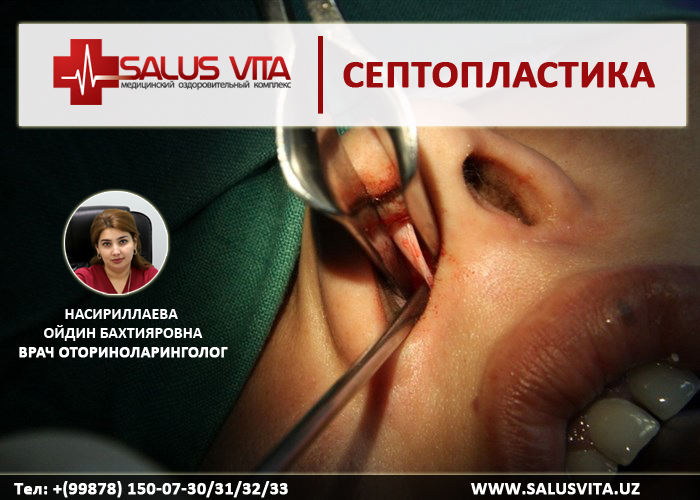
Septoplasty
Surgical correction of a deviated nasal septum involves removing the curved areas of cartilage and bone. Correction of the nasal septum is carried out endonasally (i.e. through the nasal cavity without visible incisions). The operation is performed under general anesthesia. The duration of the operation is less than an hour.
Preparation for septoplasty
The initial diagnosis of a deviated nasal septum is usually made by an otolaryngologist in a clinic or an operating surgeon in a hospital. If the doctor believes that surgical intervention is necessary, then a hospitalization date is set and a standard set of tests is given that must be taken before surgery.
A couple of weeks before the upcoming operation, the patient should avoid hypothermia and infections. It is necessary to cure diseased teeth and eliminate other sources of inflammation in the body.
For women, it is better to plan surgery in the middle of the menstrual cycle.
On the morning of the surgery, you should not eat or drink. An hour before the operation, the patient is given premedication - medications are administered that help prepare the body for anesthesia.
Postoperative period
For 1 day after surgery, the patient is forced to wear turundas or hemostatic sponges in the nose. This causes discomfort, since during this time nasal breathing is difficult. On days 2–4, nasal breathing is completely restored.
After the operation, the otolaryngologist regularly examines the patient, performs toileting of the nasal cavity and irrigation with medicinal solutions.
If in the postoperative period the patient is bothered by pain, then analgesics (painkillers) are prescribed. To prevent infectious complications, antibiotic therapy is prescribed. After the patient is discharged from the hospital, he is observed for a month by an ENT doctor in the clinic.
The doctors of the otolaryngology department of the SALUS VITA clinic are fluent in all techniques for correcting a deviated nasal septum.
Septoplasty is performed under general anesthesia. Thanks to high-tech equipment and the skill of otorhinolaryngologists, the operation lasts a minimum amount of time, and the postoperative period is easy and painless for patients.
Medical expert of this article
Омонжонов Хусниддин Салохиддинович
врач оториноларинголог (ЛОР) · clinic «Saba Darmon»
Appointments and consultations:
+998 71 210-30-30
Call
This information is for reference only. If you have symptoms, see a doctor.
Appointment
Обратитесь к врачу
Информация в статье носит общий характер. Для точного диагноза и плана лечения нужен очный осмотр — позвоните, подберём удобное время.
📞+998 55 055 10 03 Book online →Tashkent Medical Park
Tashkent, Учтепинский district, Chilonzor 12 block, st. М.Шайхзода, 7
Пн 08:30-20:00
Также принимают