
23.12.2017 · 👁 3,688
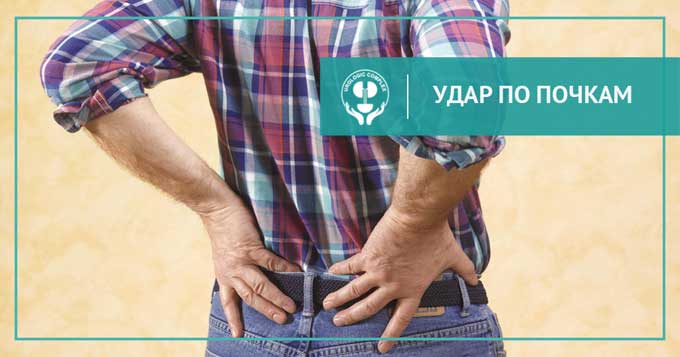
A blow to the kidneys
Kidney diseases are insidious and creep up unnoticed - sometimes years pass from the onset of the disease to the first renal colic.
Urolithiasis (nephrolithiasis, urolithiasis) is the most common kidney disease. It is characterized by the formation and accumulation of various organic and mineral formations - stones - in the organs of the urinary system.
Kidney stones can be chemically phosphate, carbonate, urate, oxalate, they can be single or multiple, different in shape and size (from 0.1 to 15 cm).
The insidiousness of urolithiasis lies in the fact that for the time being, seven out of ten people, without knowing it, carry either stones or sand within them. After all, the process of stone formation proceeds without attacks, cramps and other manifestations, usually making itself felt in an advanced form. And the hour of acute pain suddenly pierces the lower back or sides of the abdomen comes. Before this, the disease can occur without any symptoms, and kidney stones are often discovered by chance during an X-ray or ultrasound examination.
MAIN SYMPTOMS OF THE DISEASE
• passage of stones (stones and sand)
• hematuria (blood in the urine)
• dysuria (frequent painful urge to urinate)
• pyuria (pus in the urine)
• anuria (complete cessation of urine outflow due to blockage of the ureter with a stone)
The nature of the pain depends on the size and location of the stones. Small moving stones (sand) may not cause pain, but when excreted in the urine they can irritate the mucous membranes of the urinary tract.
Large stones are localized in the renal pelvis, causing constant aching pain in the lower back.
Small moving stones in the pelvis and upper urinary tract provoke attacks of acute pain (renal colic). Pain occurs in the lower back, upper abdomen, groin area, external genitalia, and thigh. Urination becomes more frequent, blood appears in the urine, nausea, and vomiting.
Urolithiasis can be complicated by infection in the urinary tract (pyelonephritis, hydronephrosis, renal failure).
For the prevention and treatment of urolithiasis, the following is used:
• conservative (drug) therapy
• method of remote crushing of stones (extracorporeal shock wave lithotripsy)
• surgery
The method of extracorporeal lithotripsy is indicated for small and medium-sized stones; in the presence of large stones, surgical treatment is indicated.
Recently, urolithiasis has become noticeably younger. This is due to poor nutrition, unhealthy lifestyle, poor environment and poor quality water. Therefore, the main condition for the prevention of urolithiasis is compliance with therapeutic dietary nutrition.
IT WOULD BE GOOD TO LAY A STRAW
The safety margin of the kidneys is large. Their work is designed for 150 - 200 years. But the trouble is that we manage to “plant” buds by the age of 25–30.
Therefore, the treatment approach must be reasonable. First you need to destroy the causative agent of inflammation, and then stop it with anti-inflammatory preparations.
WHO ARE THE STONES THREATENED?
People who eat dry food and have sedentary work.
Men suffering from chronic prostatitis can also be considered at risk: due to impaired urine outflow, stones usually appear in the kidneys, ureters and bladder.
ADVICE FOR EVERYONE: at the first alarming symptoms - urinary retention, frequent urge, incomplete emptying of the bladder - you need to contact a specialist.
Urologists at Urologic Complex are professionals with many years of experience. They will always help you with urinary disorders and strange pains - with any urological problems. They will make the correct diagnosis and perform an ultrasound. If you have urolithiasis, the urologists at our medical center will recommend a nutrition and lifestyle program.
For any questions, please call: +998 55 055 10 03, +998 55 055 10 03. We remind you that the Urologic Complex clinic is located at Chilanzar, block 12, st. M. Shaykhzoda, 7
#urologiccomplex #urologicuz
Medical expert of this article
Рахмонов Oybek Махаммадмуйдинович
главный врач, уролог · clinic «Urologic Complex»
Appointments and consultations:
+998 55 055 10 03
Call
This information is for reference only. If you have symptoms, see a doctor.
Appointment
Обратитесь к врачу
Информация в статье носит общий характер. Для точного диагноза и плана лечения нужен очный осмотр — позвоните, подберём удобное время.
📞+998 55 055 10 03 Book online →Tashkent Medical Park
Tashkent, Учтепинский district, Chilonzor 12 block, st. М.Шайхзода, 7
Пн 08:30-20:00
Также принимают