
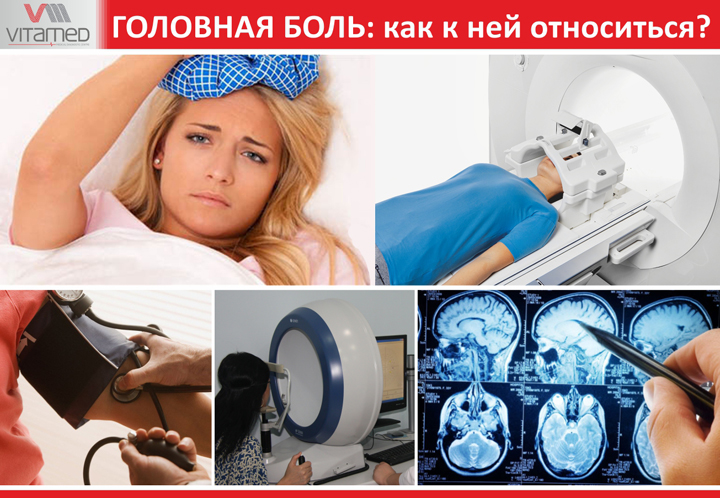
Headache: how to treat it?
Headache: how to treat it?
It would seem a strange question: of course it's negative! There is not a sane person in the world who would think otherwise.
A neurologist of the highest category at the VITAMED MEDICAL clinic, candidate of medical sciences, senior researcher Arifdzhanov Shukhrat Hamidzhanovich will talk in this article about the causes of headaches and examination methods.
And in fact, we associate pain (both physical and moral) with injuries, illnesses, old age, and unpleasant life situations, and therefore we all strive to get rid of it faster.
But, on the other hand, pain is the most important natural protective mechanism designed to prevent further, deeper damage to both the outer coverings of our body and internal organs.
To determine the cause of the pain, the most important are its nature (sharp or dull, burning, pulsating, bursting or compressing, stabbing, cutting - “dagger”, etc.), duration and frequency (constant, periodic, day or night, paroxysmal with specification of the frequency, duration, nature of paroxysms, seasonal, etc.), localization (head, neck, back, chest cell, abdomen, limbs), irradiation - spread to neighboring or distant parts of the body. It is necessary to pay attention to what provokes the pain if it recurs, and what helps relieve it (change of activity, position of the body and limbs, rest, sleep, heat or cold, medications).
Take, for example, a headache. There are many different causes of headaches. Headache can occur due to changes occurring in the brain, its membranes, blood vessels of the head, bones of the skull, its soft tissues, as well as various diseases that occur in other organs and systems. A headache may be a symptom of some changes in the human body.
Risk factors for headaches of various etiologies include:
- neurological or cardiovascular diseases (including hypertension, osteochondrosis, etc.)
- infectious diseases
- intoxication
- overwork
- excessive alcohol consumption
- smoking
- sharp noise
- bright light
- various smells, etc.
Since pain-sensing nerve endings are unevenly distributed in the brain, headaches can be caused by several factors:
- mechanical (direct impact of an external factor or pathological focus with tension, displacement, compression, expansion of intracranial structures),
- thermal (increase in body temperature, direct hypothermia or overheating of the head),
- chemical (exposure to endogenous and exogenous chemicals that reduce the pain threshold, for example, with uremia, food poisoning and alcohol intoxication).
The largest part of the nerve endings is located in the soft tissues of the head (skin, muscles, etc.), the walls of the superficial arteries of the head (for example, occipital, frontal, superficial and temporal). The most sensitive area is the dura mater. The vessels at the base of the brain, as well as the large branches of the arteries, are also a large part of the pain receptor zone inside the skull.
According to the mechanism of occurrence, headaches can be divided into:
- vascular
- neuralgic
- liquorodynamic
- psychogenic
- mixed
Vascular migraine headaches are pulsating in nature, gradually becoming dull or pressing, accompanied by nausea, vomiting, and black spots may flash before the eyes. The attacks are usually unilateral, varying in frequency and duration, but having a stereotypical character. Vascular non-migraine headache is a consequence of a violation of vascular tone, does not have a strict periodicity, is often pulsating, compressive, quickly becomes diffuse, and is accompanied by a feeling of heaviness in the head. A headache of this type can occur with cerebral vascular insufficiency, a sharp increase in blood pressure, hypoxic conditions, carbon monoxide poisoning, after taking nitrates and nitrites, after a convulsive attack in patients with epilepsy, after drinking alcohol, with severe allergic and anaphylactic reactions. Vascular headaches include atherosclerosis, which is usually observed in the morning and lasts several hours.
With neuralgia, an “electric shock” effect is observed, as well as tearing or burning pain in the back of the head. The liquorodynamic type, caused by disturbances in the production and circulation of cerebrospinal fluid, is characterized by a specific feeling of constriction coming from within.
In inflammatory and non-inflammatory diseases of the brain and its membranes, headache can be an early, main or only sign of an incipient disease (tumor, abscess, meningitis, arachnoiditis, encephalitis). In the initial stages of the disease, it is often limited. With organic volumetric processes, the headache is usually constant, often occurs at night, early in the morning, and intensifies with changes in head position and physical activity. Over time it progresses. Symptoms such as dizziness and blurred vision may appear.
Post-traumatic headache is one of the main and persistent symptoms of traumatic brain injury. It can be early (appears immediately or within the first day after injury), late (occurs after a few days) and chronically late (noted after 2-3 months). The duration of the headache period and its intensity are not always proportional to the severity of the injury, the depth and duration of disturbances of consciousness, and the severity of other neurological symptoms.
Psychogenic headaches include the feeling of pain in the head in patients with depression, hypochondriacal syndrome, and hysteria. Psychogenic pain is much more often observed in women, is characterized by persistence (less often has a paroxysmal nature), and is naturally associated with stress, mental trauma, and emotional tension.
For persistent headaches, it is necessary to determine their causes. A radiating headache (in the depths of the orbits, in the forehead, crown, occipital, behind-the-ear areas) can be observed with pathological processes in the nasal cavity and paranasal sinuses, in the ear. In acute processes, the pain can be very intense, neuralgic or pulsating in nature, intensified by tilting the head or sudden movements. A dull, bursting headache may accompany vasomotor rhinitis.
The cause of a headache can also be physical or mental fatigue, overstrain of the visual organs, especially if its deficiencies are not corrected by glasses, diseases of the internal organs, and cervical osteochondrosis. If your head hurts from overwork, you need to rest and reconsider your working day. Sleeping in a ventilated room and light exercise in the morning usually reduces such pain.
If the cause of headaches is diseases of internal organs, you first need to treat these diseases.
With uveitis, the pain that begins in the area of the eyeball takes on the character of trigeminal neuralgia, then spreads to half of the head, is sharp, shooting, boring in nature, radiating to the teeth and ear. Refractive errors usually manifest as headaches after prolonged visual strain (reading, prolonged viewing of television, etc.).
In addition to studying the anamnesis, it is necessary to conduct a comprehensive examination:
- somatic, neurological status (identification of signs of diseases of internal organs and organic neurological symptoms);
- ophthalmological (examination of the fundus, measurement of intraocular pressure);
- MRI of the brain (if necessary, with vascular or angiographic modes), cervical spine;
- X-ray (depending on the suspected cause of the headache): computed tomography of the brain, computed tomography of the cervical spine, computed tomography of the paranasal sinuses; computer organ tomography chest, abdominal cavity, pelvis - if the somatogenic nature of cephalgia is suspected.
- laboratory and instrumental (blood and urine tests, mandatory measurement of blood pressure for several days, CDS (color duplex scanning) - study of blood flow in the great vessels of the head, rheoencephalography, etc.).
A comprehensive examination helps to identify the cause of the headache and prescribe the necessary treatment aimed at the underlying disease.
Long-term self-administration of painkillers that do not address the cause of the headache may have adverse health effects.
With a timely comprehensive examination and consultation with a doctor, the treatment prescribed for the underlying disease usually eliminates or reduces the headache.
You can ask any questions you are interested in by sending a request by email or by contacting us by phone:
info@vitamed.uz
(+998 71) 129-81-81
(+998 71) 129-82-82
Additional information:
www.vitamed.uz
Telegram channel - https://telegram.me/vitameduz
Ambulance – 1063, (+998 71) 129-00-03
Be healthy and take care of your loved ones!
Обратитесь к врачу
Информация в статье носит общий характер. Для точного диагноза и плана лечения нужен очный осмотр — позвоните, подберём удобное время.
📞+998 55 055 10 03 Book online →